


Faye Travel Insurance
Zenner, Inc.
Travel insurance is easy to ignore until a flight is delayed, a suitcase disappears, or a medical problem turns a simple holiday into a stressful day. I reviewed Faye Travel Insurance with that moment in mind, paying particular attention to how clearly the app communicates, how manageable it feels under pressure, and whether its mobile-first approach works for people with different abilities and travel situations. Developed by Zenner, Inc., it sits in the Travel & Local category and is free to install for everyone.
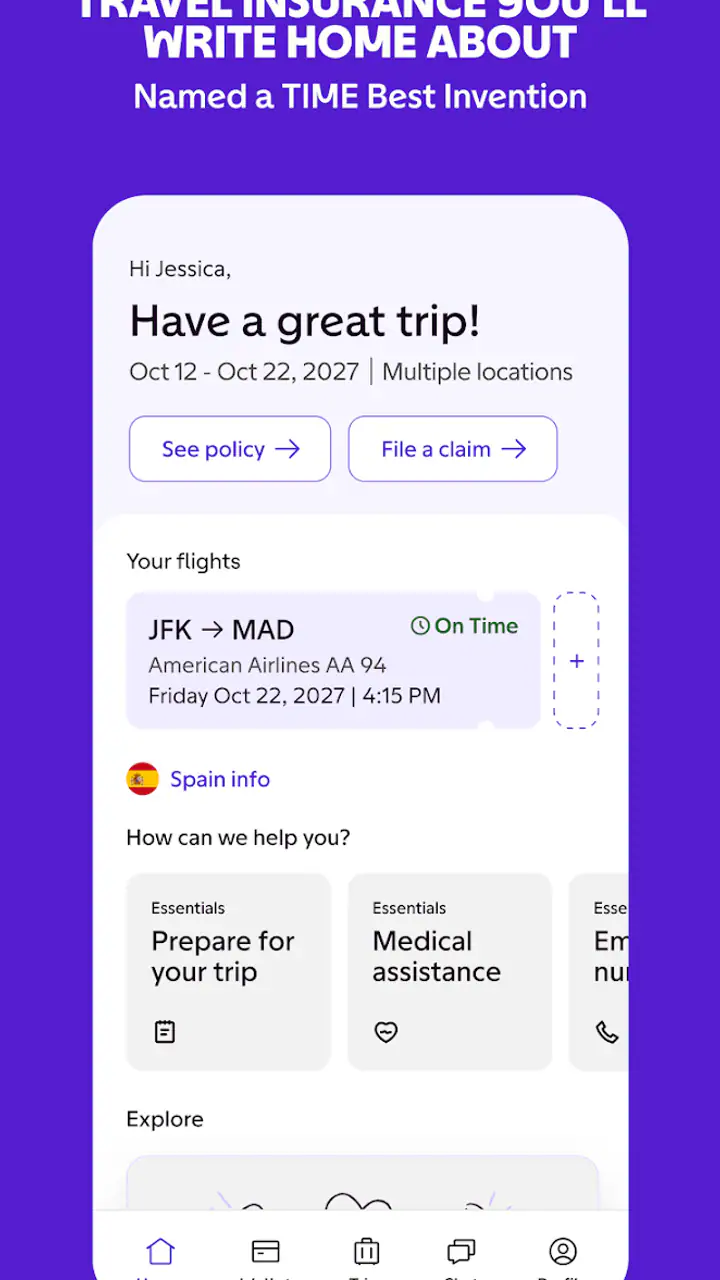
Its central promise is practical rather than glamorous: help users reach assistance at any time, submit claims quickly, and handle reimbursements from a phone. That makes it more useful as a travel companion than as a sightseeing tool. I would not open it every day at home, but I can see why it has attracted over 50 thousand installs and a strong 4.7 average from roughly 345 ratings. The app has been available since February 24, 2022, and version 2.56.0 runs on Android 7.0 or later.
How Faye Travel Insurance works when travel gets complicated
Readability and navigation that matter during a disruption
The most important test for an insurance app is not whether it looks impressive on a calm afternoon. It is whether I can understand what to do when I am standing in an unfamiliar airport, dealing with a cancelled connection, or trying to document an unexpected expense. Faye’s mobile focus is helpful here because the relevant actions are kept close to the trip context instead of being scattered across unrelated travel tools.
I found the idea of having assistance and claims in the same place more reassuring than keeping policy documents in an email inbox. A phone is already the object most travelers reach for when plans change. Bringing the insurance workflow onto that device reduces one common source of friction: searching through messages, remembering which web page to use, and wondering whether I have contacted the correct department.
The wording is also important for people who do not feel comfortable with insurance terminology. A good travel app should make the next action obvious without requiring users to interpret dense legal language before they can begin. In my view, Faye is strongest when it presents the process as a sequence of practical decisions: get help, report the problem, add the relevant information, and follow the reimbursement process.
Related News

Why WhatsApp Messenger Still Makes Everyday Communication Feel Easy

Jurassic World: The Game Is the Better Dino Tycoon for Strategic Players

Threads in Real Life: Who Should Join, Lurk, or Leave

How SHEIN Turned Shopping Into an Endless Content Feed

How to Make Fortnite Feel Smarter on Mobile

Should You Switch to Microsoft Outlook on Mobile?
That does not mean I would treat the interface as a replacement for reading the policy. Insurance always depends on conditions, exclusions, limits, and the exact circumstances of an event. The app can make access to the process easier, but it cannot turn a complicated coverage question into a guaranteed payment. I would still review the policy before departure, especially if I have a pre-existing medical concern, an expensive booking, or activities that may need special consideration.
One useful habit is to open the app before leaving home rather than waiting for an emergency. I would check that I can sign in, locate the assistance area, and recognize where a claim begins. This small preparation step is particularly valuable for travelers who find unfamiliar interfaces tiring or who may have limited concentration after a long journey. It also gives me a chance to save the app where it is easy to reach instead of searching for it while stressed.
Motor and sensory considerations in real travel conditions
Mobile insurance has a clear advantage for users who cannot easily make a phone call in a noisy terminal or who prefer to read and type rather than explain an incident verbally. A written workflow can give someone more time to understand a question, gather details, and compose an accurate answer. For travelers with hearing-related needs, that can be more comfortable than relying entirely on voice support, although the availability and suitability of every contact method should be checked inside the current app experience.
Gallery
Typing a claim on a small screen is not effortless for everyone. People with tremors, limited dexterity, joint pain, or fatigue may find repeated form entry demanding, especially when they are also handling luggage. My practical advice is to keep important booking details, receipts, and identification documents organized before the trip. That does not remove the need to provide information, but it can reduce the number of times I have to switch between apps, bags, and paper documents.
For users with low vision, the value of a clear layout depends on more than large text. Contrast, spacing, predictable buttons, and compatibility with the phone’s own text and display settings all affect whether a claim can be completed comfortably. I would test Faye with the accessibility settings I normally use before traveling. If enlarged text causes buttons or instructions to become difficult to reach, that is a warning to prepare an alternative method of contacting assistance.
Travel environments create sensory problems that are easy to overlook. Bright airport lighting, constant announcements, crowds, and time pressure can make even a familiar screen difficult to process. A compact app workflow is potentially helpful because it avoids carrying another booklet or navigating a full desktop site, but I would not assume every screen will feel equally calm. The best approach is to complete non-urgent setup in a quiet place, then use the app as a known tool rather than learning it during a crisis.
There is also a motor advantage to keeping evidence digital. Photographing a receipt or document can be quicker than manually copying every detail, provided the image is readable and accepted by the claim process. I would take clear photos immediately, include the whole document, and avoid relying on a blurry image captured while walking. This is a small but meaningful workflow improvement for anyone who finds prolonged typing difficult.
Situational access for different kinds of travelers
Faye makes the most sense for people who want insurance support to travel with them. A family member managing several bookings may appreciate having a single mobile starting point instead of asking each traveler to remember separate instructions. A solo traveler may value the same thing for a different reason: when there is no companion available to search through emails or call an insurer on their behalf, a visible in-app route can reduce decision fatigue.
Consider a realistic situation. I arrive at my destination and discover that my checked bag has not appeared. The useful response is not to open the insurance app immediately and type a long explanation from memory. I would first report the missing bag through the airline’s process, request the relevant reference or report, keep the baggage tag, and photograph any paperwork. Then I would use Faye to understand the next insurance step and submit the supporting material in an orderly way. The app is most valuable here as a bridge between the incident and the claim, not as a substitute for the airline’s own procedure.
The same principle applies to delays and cancellations. I would keep boarding passes, revised itineraries, written notices, and receipts for reasonable expenses together. If the app supports the claim workflow as intended, having those records ready should make the submission less chaotic. The non-obvious trade-off is that speed comes from preparation, not from rushing through the form. A quick claim with missing evidence may create more back-and-forth than a careful submission made a little later.
For older travelers or people who are less confident with mobile services, the app can be useful if a trusted companion helps with setup before departure. That person could confirm where assistance is found and help organize documents without taking over the traveler’s account. I would avoid sharing passwords casually, though. A better arrangement is to agree in advance on who will help, what information is stored, and how the traveler can still access support independently.
International travel adds another layer. A phone-based service is convenient when paper documents are not immediately at hand, but it depends on the traveler being able to use the phone, connect when needed, and understand the instructions. I would download and sign in before departure, keep the device charged, and carry a backup record of the policy and key contact details. Those precautions are especially important for people who may be affected by roaming problems, low battery, or unfamiliar network conditions.
Faye is less compelling for someone who wants a broad travel-management app with maps, reservations, translation, and itinerary planning. Its purpose is narrower. That narrowness is a strength when I need insurance help, but it means I would use it alongside airline, hotel, and destination apps rather than expecting it to replace them.
Claims and reimbursements: where convenience meets responsibility
The ability to process claims and reimbursements from the app is the feature that gives Faye its practical identity. I prefer this to a process that forces me to print everything or wait until I return home. A mobile claim can be started while the details are fresh, and that may help prevent forgotten dates, missing receipts, or vague explanations.
Still, “quick” should not be interpreted as automatic. The insurer needs enough information to assess what happened, and the quality of the submission matters. I would write a short chronological account, use exact names and dates from the documents, and attach evidence that directly supports the expense or event. If a receipt is in another language, I would keep the original rather than replacing it with my own summary.
One of the better ways to use the app is to separate urgent assistance from later administration. If I need immediate help, I would look for the assistance route first instead of beginning a detailed reimbursement form. Once the immediate problem is under control, I would return to the claim with the documents in front of me. This two-stage approach is easier to manage for users with cognitive fatigue and reduces the risk of confusing emergency guidance with reimbursement requirements.
I also would not assume that every expense is covered simply because it appears related to a disrupted trip. The app can make submission easier, but coverage still depends on the policy and circumstances. That distinction is essential for anyone comparing Faye with a credit-card insurance benefit or a traditional insurer. Those alternatives may have different documentation rules, limits, and contact procedures, so the easiest interface is not automatically the most suitable protection.
Remaining barriers and situations where another option may be better
The biggest barrier is the phone itself. A traveler with a dead battery, damaged screen, poor connectivity, or difficulty operating touch controls may not be able to use a mobile-first workflow when it matters most. I would carry a power bank, keep essential policy information available offline, and tell a travel companion where those details are stored. This is not a criticism unique to Faye; it is the unavoidable weakness of putting an important service inside one device.
Another barrier is the mental load of collecting evidence during a stressful event. Someone with memory difficulties, language barriers, or limited digital confidence may need help interpreting what to submit. The app can organize the process, but it cannot guarantee that every user will understand insurance questions without support. For those travelers, a provider with a familiar phone-based relationship or an agent who can guide them personally may be a better fit.
Users who require highly specialized accessibility tools should test the current version with their own setup before relying on it abroad. I would pay attention to keyboard navigation, screen magnification, voice control, and whether labels remain understandable when display settings change. I cannot treat the app as universally accessible simply because it is digital. Accessibility is personal, and a workflow that feels straightforward to me may still be difficult for another traveler.
There is also a privacy consideration in any insurance app. Claims can involve travel plans, personal identity details, medical information, and financial records. I would install it only from the official app marketplace, use a strong device lock, and avoid uploading documents from a public or shared device. Convenience should not lead me to leave sensitive files in a gallery or downloads folder that other people can access.
Compared with buying insurance through a desktop website, Faye feels better suited to travelers who want ongoing access after purchase. A website may be preferable for someone who reads long documents more comfortably on a large screen. Compared with calling a traditional insurer, the app may reduce waiting and make evidence submission more organized, while a phone conversation may be better for a complicated case or a user who struggles with forms. Compared with relying only on credit-card coverage, Faye offers a dedicated insurance experience, but I would still compare the actual policy terms rather than choosing on app convenience alone.
My inclusive verdict on Faye Travel Insurance
After looking at it as both a travel-insurance tool and an access point during stressful situations, I see Faye as a sensible choice for travelers who prefer to manage support digitally. Its strongest qualities are the direct connection between assistance and claims, the ability to handle reimbursement from a phone, and the reduced need to search through scattered travel paperwork. The free app is rated for Everyone, and its broad Android compatibility makes it approachable for people using older devices.
I would recommend it especially to organized travelers who are willing to prepare before departure. Save the policy information, learn the route to assistance, keep receipts together, and make sure a backup contact knows how to help. Those steps turn the app from a passive installation into a useful part of a travel plan. They also make it more workable for families, solo travelers, and people who need extra time to process information.
I would be more cautious if I depended on advanced assistive technology, had very limited dexterity, rarely used smartphone forms, or expected personal guidance for every insurance question. In those cases, I would test the app early and compare it with a provider offering a communication method I already trust. A polished mobile workflow cannot compensate for a mismatch between the user and the device.
My final view is positive but practical: Faye Travel Insurance is most valuable when preparation, clear documentation, and mobile access come together. It does not remove the complexity of insurance, and it should not be treated as a promise that every claim will be approved quickly. What it can do is give travelers a more reachable place to seek help and begin the paperwork. For me, that makes it worth considering before a trip, provided I read the coverage carefully and keep a non-digital backup for the moments when a phone is not enough.
FAQs for Faye Travel Insurance
What is Faye Travel Insurance and what does it cover?
Faye Travel Insurance is a travel protection service designed to help with common problems that can happen before or during a trip. Depending on the plan and destination, coverage may include trip cancellation and interruption, medical emergencies, evacuation, baggage delays or loss, travel delays, and assistance services. The exact benefits, limits, exclusions, and eligibility requirements are explained in the policy documents, so reviewing them before purchasing is essential.
Does Faye cover medical emergencies and pre-existing conditions?
Faye may provide coverage for eligible emergency medical treatment while traveling, including certain hospital, physician, and evacuation expenses. However, coverage is subject to policy limits, exclusions, and documentation requirements. Pre-existing medical conditions may be excluded or covered only when specific conditions are met, such as purchasing the policy within an applicable time window. Travelers should disclose relevant information and read the medical exclusions carefully before relying on the plan.
Can I use Faye Travel Insurance for trip cancellation or interruption?
Trip cancellation and interruption benefits may reimburse certain prepaid, nonrefundable travel expenses when a covered reason prevents you from starting or completing your trip. Covered reasons can vary by plan and may include qualifying illness, injury, severe weather, or other listed events. Canceling for a personal preference or an excluded reason usually is not covered. Always confirm the eligible reasons, deadlines, and required proof in your policy.
How do claims and reimbursements work with Faye?
If you need to use your coverage, you generally submit a claim through Faye’s digital platform or claims process, provide details about the incident, and upload supporting documents such as receipts, medical records, cancellation confirmations, or airline statements. Reporting an event promptly can help avoid delays. Reimbursement is not automatic: the claim must meet the policy terms, applicable deductible or limits, and documentation requirements.
Is Faye Travel Insurance worth downloading or buying for every trip?
Faye can be useful for travelers who want centralized policy management, travel assistance, digital claim support, and protection from potentially expensive disruptions. Whether it is worth the cost depends on your destination, health needs, trip price, airline flexibility, existing credit-card benefits, and tolerance for risk. Before purchasing, compare the premium with your possible losses and check whether another insurance policy already provides similar coverage.
Pros
- Simple online process for comparing and buying travel insurance plans.
- Offers coverage options designed for international trips and medical emergencies.
- Digital policy documents make important information easy to access while traveling.
- May include 24/7 assistance for urgent travel-related problems.
- Useful add-ons can help cover baggage
- trip delays
- or cancellations.
Cons
- Coverage limits and exclusions can vary significantly between plans.
- Pre-existing medical conditions may require disclosure or receive limited coverage.
- Claims may require extensive documentation
- receipts
- and supporting evidence.
- Some benefits depend on purchasing the policy within specific time limits.
- Not every destination
- activity
- or travel situation may be covered.


